The Reconnected
- 4.8
- Rating
- 10.00K
- Installs
- Free
- Price

 Analysis by App-foxy
The Reconnected is a parenting app built around breathwork and play therapy, but I found its real value in the way it encourages a calmer, more deliberate connection between adults and children. It is not the sort of app I would open for a quick list of generic parenting tips. Instead, it works best as a guided space for slowing down, noticing emotional reactions, and using simple shared activities to make difficult moments feel more manageable.
I reviewed it as an app from Mighty Networks, the developer behind the community platform that hosts the experience. It is free to use, aimed at a Teen audience, and has reached over ten thousand installs. Its average score is 4.8 from around one hundred sixty-five ratings, which suggests that the people who do connect with its approach tend to find it meaningful. My own impression is more nuanced: it can be genuinely useful when you are willing to practise with it, but it is not a replacement for professional care, a complete parenting course, or an instant solution during a family crisis.
How I would use The Reconnected in everyday family life
The most sensible starting point is to treat the app as a regular pause in the week rather than an emergency button. I would open it when the house is reasonably quiet, choose a breathwork or play-therapy activity, and give myself enough time to finish without immediately rushing into another task. That simple routine matters because the app’s subject is connection, and connection is difficult to build when the adult using the app is distracted or already expecting instant results.
You May Also Like

 Blood Strike: 2.5 Anniversary
Blood Strike’s Loadouts Turn Every Drop Into a Tactical Gamble
A close look at Blood Strike’s custom loadouts: how fast access to signature weapons reshapes its battle royale rhythm, rewards preparation, and narrows the gap between fights.

 Pandora - Music & Podcasts
Pandora’s Music Is Easy to Start, but Harder to Recover
Pandora’s strength is its low-effort path from a seed to a station. Its weak spot is how much confidence it asks you to place in connection, setup, and quiet recovery.

 8 Ball Pool
 Is Built on Rivalries, Rematches, and Routine
A close look at the rivalries, rematches, shared routines, and unanswered safety questions that turn a quick pool match into a persistent mobile community.

 Samsung Music
’s Quiet Strength Is Playing What You Already Own
Its reach comes less from spectacle than from dependable access to a personal library. That simplicity is both the app’s strongest retention engine and its ceiling.

 AccuWeather: Weather Radar
AccuWeather Review: A Quick, Clear Forecast for Everyday Decisions
For everyday plans, the best forecast is the one you can understand quickly. AccuWeather makes rain timing, radar, and local conditions easy to act on, with a few trade-offs.

 Hill Climb Racing
Why Hill Climb Racing Still Turns Crashes Into One More Run
A tiny car, a bumpy hill and one more upgrade: Hill Climb Racing keeps resurfacing because its simple chaos makes every near-miss feel personal.
More From Our News Desk
View All News


A realistic example would be a parent dealing with repeated after-school arguments. The child comes home tired, the parent asks several questions, and a small disagreement quickly becomes a full confrontation. In that situation, I would not hand over the phone and expect the child to solve the problem alone. I would first use a breathing exercise privately, then return to the child with a less reactive tone. Later, when both of us were calmer, I would try a play-based activity together. The useful sequence is preparation, shared interaction, and reflection, not simply pressing play on a session.
That is one of the app’s strongest practical lessons: breathwork and play therapy serve different moments. Breathing can help an adult regulate before responding, while play can create a less confrontational way to explore feelings with a child. Combining them makes more sense than using either one as a universal answer. I would use the breathing side before a challenging conversation and reserve the play side for a time when the child is open to participation.
The app also suits parents who prefer learning through doing. Reading advice can be reassuring, but it often disappears when a child is crying or refusing to cooperate. A guided activity gives me something concrete to try. The trade-off is that the activity only becomes useful when I adapt it to the child’s age, mood, and willingness. If a child sees every exercise as another instruction from an adult, insisting on it may create the opposite of the intended connection.
For that reason, I would introduce the app casually. Rather than announcing a formal emotional-development session, I might suggest trying a short breathing exercise together before bedtime or use a playful prompt during a relaxed weekend. The goal is to make the practice feel safe and ordinary. Once the child understands that participation is not a test, the activities have a better chance of becoming part of family life.
The baseline routine that makes the app more useful
My preferred baseline workflow has four stages. First, I identify the situation: am I trying to calm myself, reconnect after conflict, or create a positive shared moment? Second, I select the type of activity that matches that purpose instead of choosing randomly. Third, I keep the environment simple by putting away other distractions. Finally, I notice what happened afterward, even if the result was mixed.
That last step is easy to overlook. If an activity feels awkward, I would not immediately conclude that The Reconnected is ineffective. I would ask whether the timing was wrong, whether I expected too much from the child, or whether I joined with a tense attitude. Keeping a small mental note of those details helps me learn which kinds of practice fit my family. The app becomes more valuable as a prompt for observation rather than a machine that delivers guaranteed outcomes.
Parents should also decide in advance how long they can realistically commit. A routine that requires a perfect quiet evening will probably fail in a busy household. A shorter, repeatable moment is more useful than an ambitious plan that happens once. I would choose a consistent point in the day, such as after dinner or before sleep, while staying flexible when the child clearly needs rest or space.
Settings and preparation worth checking first
Because The Reconnected is delivered through Mighty Networks, I would spend a little time becoming familiar with the app’s navigation before involving a child. The first session should be about understanding where the relevant content is, how to return to it, and how the community-style layout feels. That preparation prevents the phone from becoming the focus while you are trying to create a calm interaction.
I would also check the device’s general notification controls. If alerts are distracting during family time, silencing them temporarily is more important than searching for a perfect in-app arrangement. This is not a criticism of the therapeutic idea; it is a practical point about attention. A breathing exercise loses some of its purpose if messages, work reminders, and unrelated alerts keep interrupting it.
The Teen content rating is another detail parents should take seriously. It does not automatically mean the material is unsuitable for every younger child, but it does mean I would preview activities myself before presenting them to a child. Age, emotional maturity, family circumstances, and the child’s comfort all matter. I would explain the activity in plain language and allow the child to decline without turning that refusal into a new conflict.
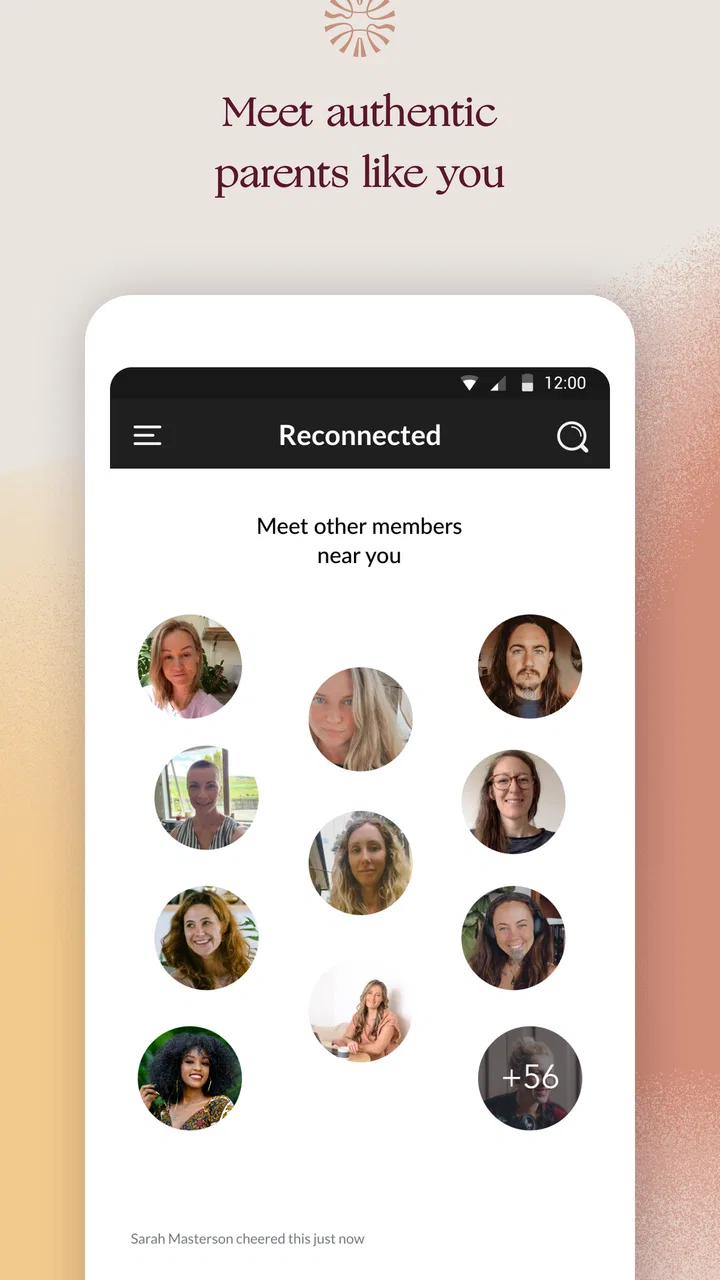
I would approach any community-oriented area with the same care I use on other social platforms. A parent may find encouragement in seeing how others discuss connection, but personal family details should be shared thoughtfully. The app can support reflection without requiring a family’s private story to become public conversation. That boundary is especially important when discussing a child’s behaviour, fears, or emotional struggles.
The current version is 8.245.53, and the app requires at least operating-system version 10. In practical terms, I would keep the device software reasonably current and make sure the app opens correctly before planning a family activity around it. This sounds basic, but it avoids the frustrating situation where a parent has finally found a calm moment and then has to troubleshoot access instead of using it.
Faster patterns for busy parents
Experienced use is less about discovering a secret shortcut and more about reducing unnecessary decisions. I would create a small personal pattern: one breathing activity for my own reset, one play-based approach for reconnection, and one option for a calm family moment. Reusing a few familiar choices makes it easier to act when stress is high. The app then becomes a dependable starting point instead of another catalogue to browse.
I would also separate private preparation from shared practice. If I am already irritated, beginning with a child-facing activity may feel artificial. Taking a moment alone first can change my voice and body language before I invite the child to join. This is a subtle but important distinction: the adult’s regulation is part of the activity, not a separate issue.
Another useful pattern is to stop while the interaction is still going well. Parents often continue because an exercise is available, but a child may have reached their limit. Ending positively can make the next attempt easier. I would rather finish with the child still comfortable than push through a complete session and create resistance around the app.
For families with more than one child, I would avoid assuming that one shared activity will suit everyone equally. A younger child may respond to movement or imaginative play, while an older child may prefer a quieter conversation after breathing. The app can be a common resource without requiring identical participation. Giving each child a choice between reasonable options may preserve a sense of control.
I would also use the app after a conflict, but not at the hottest point of the argument. When emotions are still intense, presenting a guided exercise can sound like another demand. Waiting until everyone has had time to settle makes the same activity feel like an invitation to reconnect. That timing is one of the clearest differences between thoughtful use and simply opening the app whenever something goes wrong.
Where the approach reaches its limits
The Reconnected is not the right choice for someone looking for a conventional parenting reference library, a detailed developmental tracker, or a direct crisis service. Its emphasis is experiential and relational. If you want searchable medical information, structured behaviour charts, or a formal treatment plan, another kind of resource will serve you better. I would not choose this app as the only support for serious or persistent emotional difficulties.
There is also a real commitment issue. Breathwork may seem simple, but simple does not mean effortless. Some children dislike being told to breathe in a particular way, and some adults feel self-conscious about guided exercises. Play therapy can feel even more demanding because it asks the parent to participate rather than observe from the side. If you are unwilling to join in, the app’s central method may not suit your household.
Another limitation is interpretation. A parent can misunderstand a playful activity and turn it into an interrogation: “What does that drawing mean?” or “Why did you choose that?” The better approach is to stay curious without forcing a conclusion. Play can open a door, but it does not automatically reveal a complete explanation of a child’s feelings. I would treat what emerges as a starting point for gentle conversation, not as a diagnosis.
The free price makes experimentation easier, but free access should not be confused with zero effort. The real cost is attention and consistency. Families who want a quick download that produces an immediate change may be disappointed. Families prepared to practise, observe, and adjust are more likely to see value.
I would also skip it if the child clearly experiences the phone itself as a source of conflict. In that case, a conversation without a screen, a walk, drawing with ordinary materials, or help from a qualified professional may be better. The app is a tool for connection, not a requirement for connection. Knowing when to put it away is part of using it well.
Who will get the most from it
I think The Reconnected is best for parents, caregivers, and families who want a gentle way to practise emotional connection rather than collect more advice. It is particularly appealing if you already believe that regulation and play can improve communication, but you need structure to turn that belief into a habit. The content rating also means adults should take responsibility for choosing what is appropriate before sharing it with younger children.
It may be useful for a parent who tends to react quickly and wants a repeatable pause before responding. It may also help a caregiver who finds direct emotional questions uncomfortable and would rather begin through play. In both cases, the app offers a bridge between intention and action. It does not remove the difficult work, but it can make the first step less vague.
I would be more cautious about recommending it to someone expecting measurable progress, formal assessments, or a complete programme with every family situation mapped out. It is also not ideal for a child who does not want to participate and for a parent who plans to use it as a substitute for listening. The app works through relationship, so the adult’s attitude matters at least as much as the selected activity.
Compared with ordinary parenting articles, its advantage is that it turns ideas into shared practice. Compared with meditation apps, its focus is less about individual relaxation and more about the relationship between caregiver and child. Compared with professional play therapy, it is more accessible and informal, but it does not offer the same personalised expertise or clinical accountability. That middle position is both its appeal and its boundary.
My verdict after building a repeatable habit
The Reconnected left me with a positive but grounded impression. I like that it connects breathwork with play therapy instead of treating calmness as an isolated personal goal. The strongest results come when I use breathing to prepare myself, choose an activity that fits the moment, and allow the child to participate without pressure. That workflow feels more realistic than expecting one exercise to repair a difficult relationship immediately.
Mighty Networks provides the underlying app experience, while the content gives it a more focused parenting purpose. The app was released on March 8, 2023, and its current version is 8.245.53, but the more important question is whether its style matches your family. The high average rating and growing install base show that it resonates with many users, yet popularity should not decide the matter for you. Your child’s temperament and your willingness to practise are more relevant.
My practical recommendation is to try it free, preview the material, adjust notifications, and establish one modest routine before judging it. Do not begin during a crisis, do not force a reluctant child, and do not treat playful responses as clinical evidence. Use it as a structured invitation to slow down and reconnect.
The Reconnected is worth choosing when you want a practical relationship-building habit, not a magic parenting fix. If that distinction suits what you need, it can become a thoughtful part of family life. If you need diagnosis, emergency help, detailed tracking, or highly personalised treatment, I would choose a more specialised alternative and keep this app, at most, as a supplementary tool.
FAQs for The Reconnected
01What is The Reconnected app about?
The Reconnected app is designed to enhance personal growth and family dynamics through a variety of self-help tools and resources. It offers courses, meditations, and exercises aimed at improving emotional intelligence and mindfulness. The app is particularly focused on fostering better connections within families and personal relationships.
02Is The Reconnected app suitable for all age groups?
The app is primarily targeted at adults, especially parents, looking to improve their family relationships and personal well-being. While some content may be appropriate for older teenagers, the core materials are geared towards adults who are seeking guidance in parenting and personal development.
03Does The Reconnected app require a subscription?
Yes, The Reconnected app operates on a subscription model. Users can choose from several subscription plans that offer access to a variety of courses and features. There is often a free trial available, allowing users to explore the app's content before committing to a paid plan.
04What kind of content can I expect from The Reconnected app?
The app provides a wide range of content including interactive courses, guided meditations, and exercises. These are designed to help users improve mindfulness, communication skills, and emotional resilience. The content is well-structured to provide step-by-step guidance in fostering better familial and personal connections.
05Can The Reconnected app be used offline?
Some features of The Reconnected app can be accessed offline, such as previously downloaded courses and meditations. However, an internet connection is required for syncing progress and accessing new content. It’s advisable to download necessary materials when online to ensure uninterrupted use.
Pros
- User-friendly interface for easy navigation.
- Offers a variety of meditation techniques.
- Includes personalized growth plans.
- Strong community support features.
- Regular updates with new content.
Cons
- Limited offline access for some features.
- Requires subscription for full access.
- Initial setup can be time-consuming.
- Notifications can be overwhelming.
- Some content may feel repetitive.

The Reconnected
Gallery